
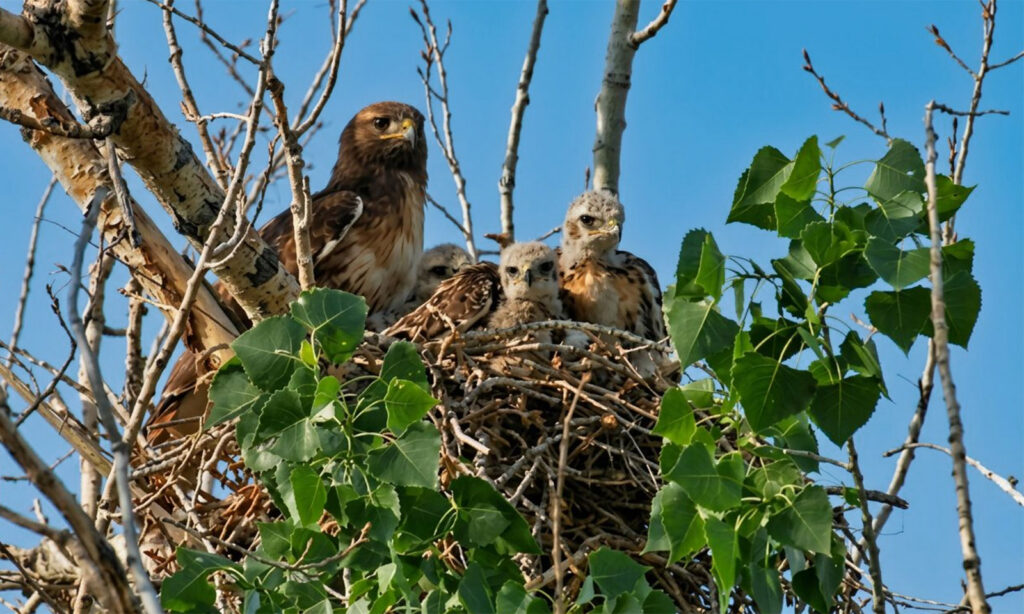
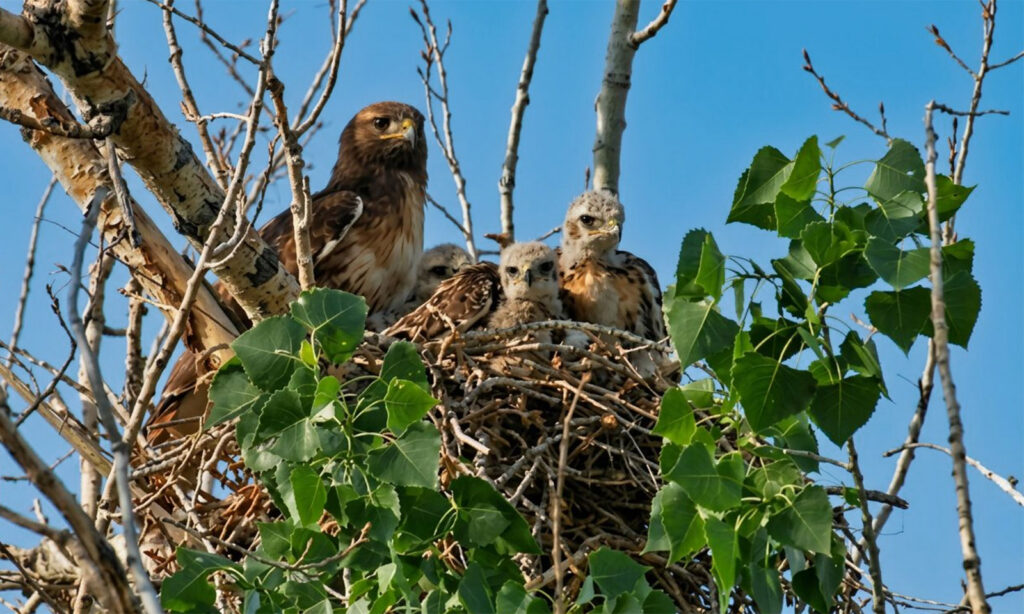
A nestling red-tailed hawk, its white head visible above a large nest atop a coast live oak, seems to stand sentry over its two siblings while their parents are off to hunt. The nest is in Fremont Canyon, the wildest and most remote area of the 57,500 acres of open space that Irvine Company has dedicated for permanent preservation and public access.
You can spot the bird with the naked eye. Visible through scopes, dark feathers on its upper wing help raptor nest monitors determine its age.
“We affectionately call them ORAR2H13,” says Ross Gough, a volunteer for Irvine Ranch Conservancy. That is the nest’s identification number, he explains with a smile. As top predators, raptors play a critical role in maintaining healthy ecosystems.
Raptor nest monitoring, which recently concluded for the year, is one of hundreds of IRC programs implemented by more than 500 volunteers.
The volunteer certification process begins with an online application
(letsgooutside.org/volunteer) and continues with orientation, training hikes and classes. It culminates in docent and trail guide certification. The process from application to certification can take up to a year.
IRC and OC Parks volunteers serve the open space as well as the cities of Irvine and Newport Beach, in areas such as Bommer Canyon and Buck Gully Reserve, respectively.
“Everything we do involves volunteers, and there’s a whole scope of work that they can do,” conservancy spokesperson Scott Graves says.
“Fire Watch is, in my mind, the most important,” Graves says. “The biggest threat to the land is wildfire. But there’s also wildlife monitoring, invasive species control, a native seed farm for habitat restoration … so many possibilities.” Others include bird counts and butterfly counts.
The Native Seed Farm, in north Irvine, uses 1,000 pounds of native seed annually to propagate more than 50 native plant species for habitat restoration and enhancement.
“Everything we do involves volunteers, and there’s a whole scope of work that they can do.”
Scott Graves, Irvine Ranch Conservancy spokesperson
Among its wildlife efforts, the conservancy supports the threatened Western spadefoot toad through habitat restoration, notably pond refurbishment so the species can reproduce.
Both of those programs offer weekly public stewardship opportunities. Go to letsgooutside.org for more information.