Take a journey through time from 1562 when California first appeared on a map – though it was believed then to be an island – to present-day Orange County and Irvine, while simultaneously getting in your 10,000-plus steps and enjoying the beauty of the Jeffrey Open Space Trail.
The 5-mile route, more like a paper clip than a loop as it turns back on itself, loosely follows Jeffrey Road, spanning much of the city from just past Portola Parkway in the north to the Quail Hill open space in the south.
Walk through the past
The historical narrative begins with art installations focusing on early Native American villages, then Spanish explorations and Mexican settlements, leading up to California statehood in 1850.
As you meander along the paved paths, you’ll encounter markers, colorful mosaics, engraved concrete panels and artistic displays that describe Irvine’s evolution from a farming community to a shining example of thoughtful environmental preservation and neighborhood development.
I’m a “Jeopardy!” fan, so I reveled in learning random facts: For example, in 1909, California’s first airplane flight began in an Irvine Ranch bean field. Who knew?
Best of all, for someone who loves trivia, history and animals, I was delighted to learn about Cienega de las Ranas, the Swamp of the Frogs. This was the name given to a vast marshland stretching from Newport Bay to near Red Hill, home to millions of tree frogs. Apparently, it was a vital landmark for travelers in the 1800s, who used the croaking amphibian chorus to navigate during dark, misty nights.
Perfect for picnics
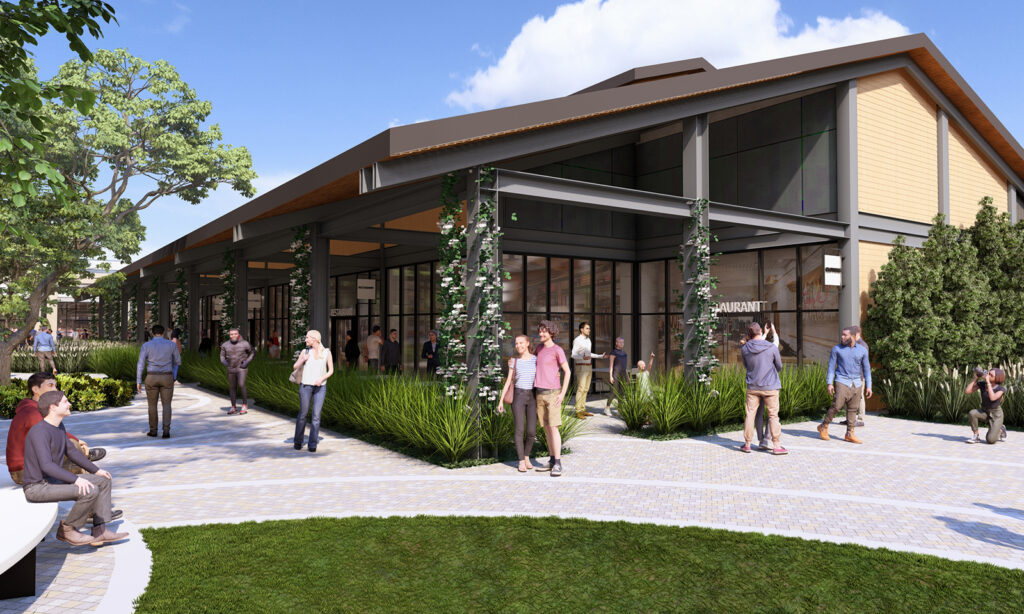
Now, Jeffrey Open Space Trail is a picture-perfect example of the best of beautifully planned Irvine, not a bog or frog to be seen in the rare fog. Expanses of brilliant green lawn offer places to throw Frisbees or host a picnic. Gravel paths wind through shade trees beside rocky creek beds.
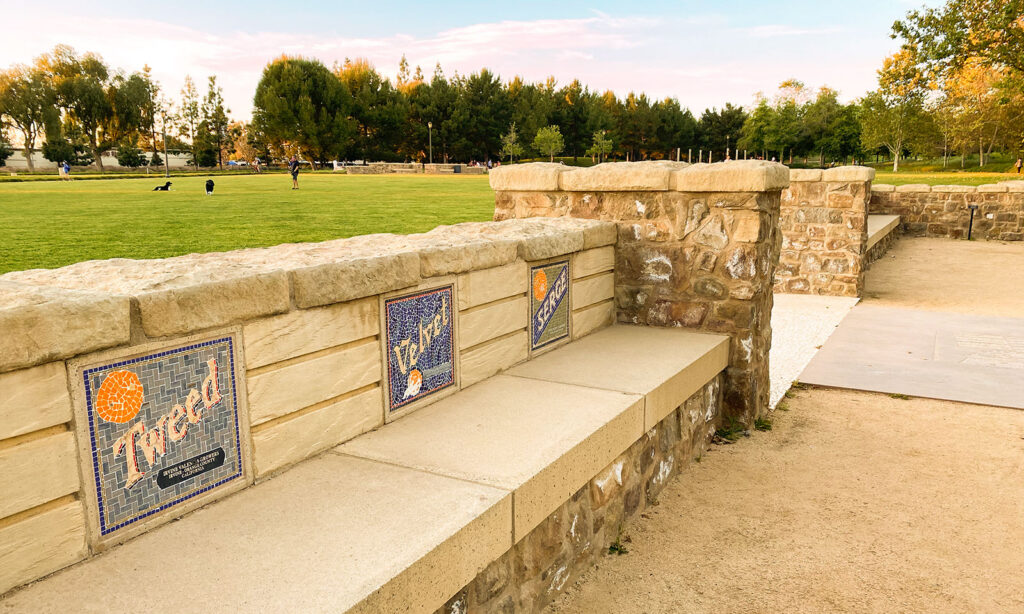
Purple jacaranda trees and Cleveland sage brighten the landscape. Citrus trees planted along parts of the path recall the scent and sight of Irvine Ranch orange orchards. The nearby pavilion features gorgeous hand-tiled art honoring Irvine’s historic orange-crate labels.
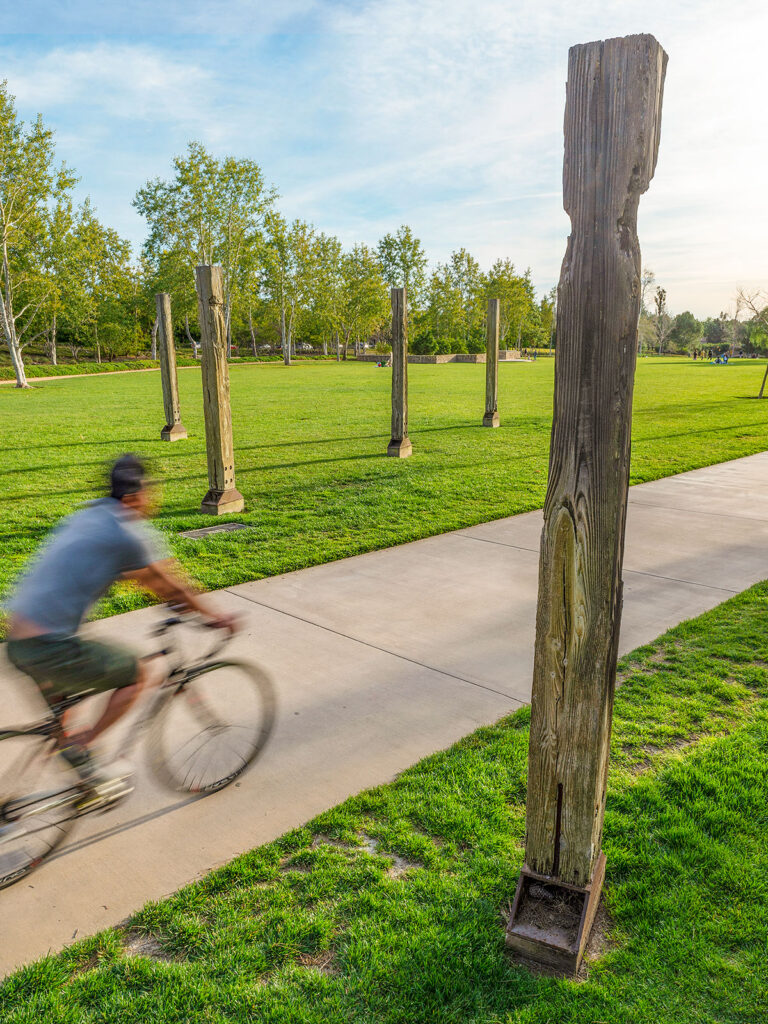
There’s also artistic whimsy to be enjoyed, with the Stonehenge-like arrangement of vertical wooden beams that supported the floor of the historic Irvine Valencia Growers Packing House, built in 1929. Standing upright, they beckon the kid in all of us to slalom our way around the posts.
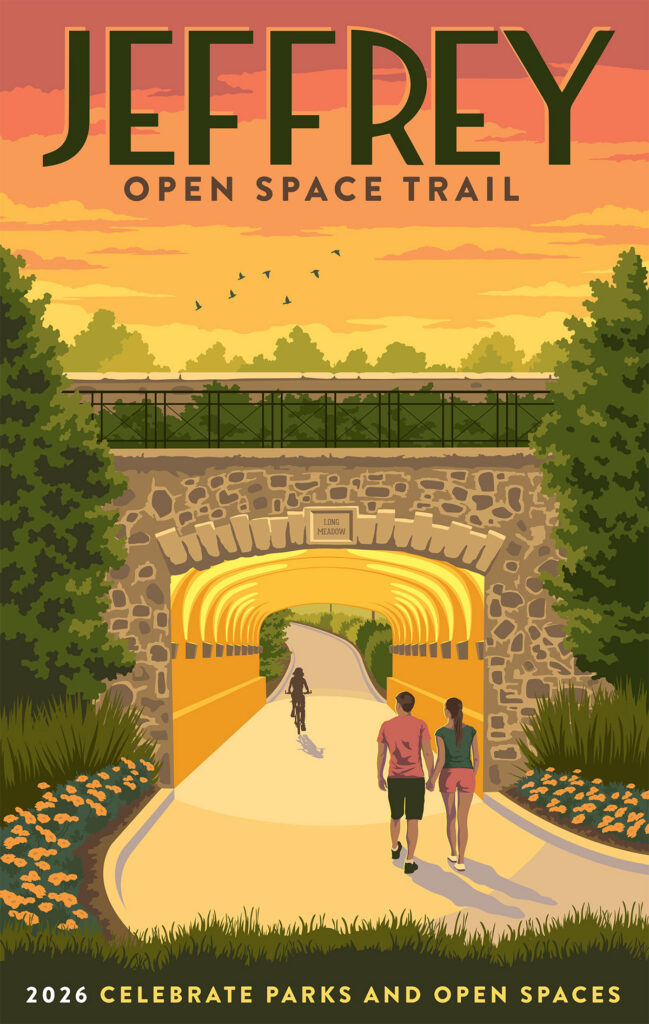
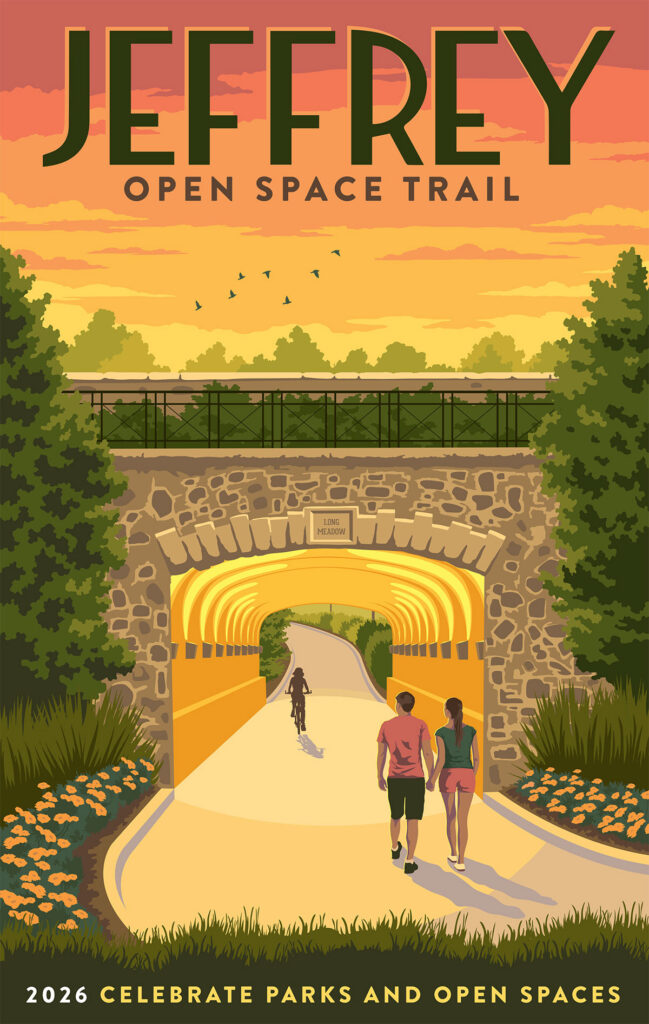
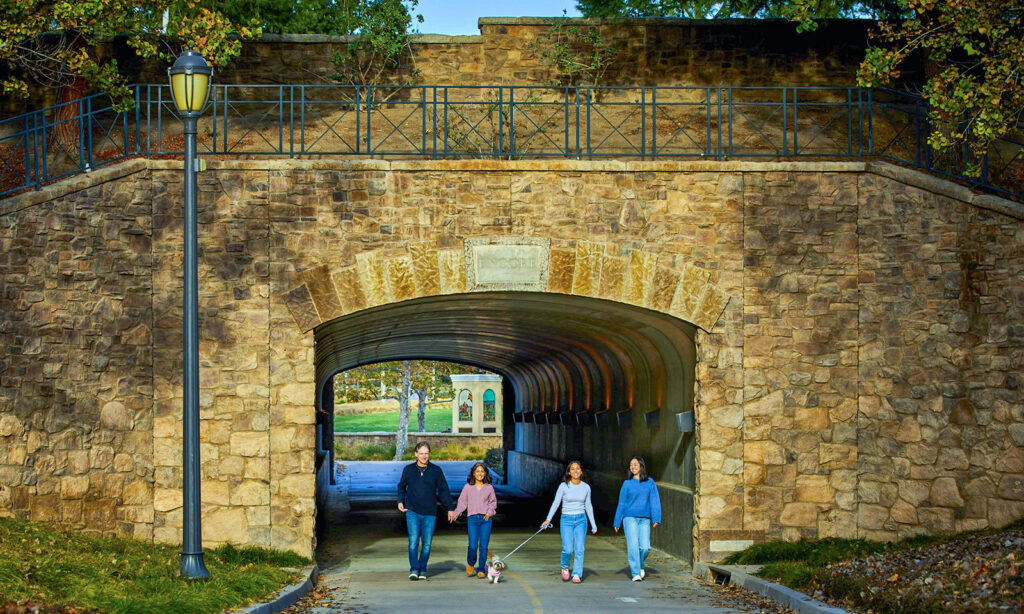
That architectural invitation to explore is typical of Jeffrey Open Space Trail. Who doesn’t love railway-style bridges and stacked-stone tunnels, the way they suggest mysterious destinations to be discovered? You’ll find plenty of those in this park, along with intriguing side paths.
“We love the bridges and tunnels that connect the villages together, all while allowing us to avoid car traffic.”
Michelle LeVasseur
In another nod to history, the stone-and-timber restrooms resemble structures reminiscent of the architecture you’d find in national parks. Gas-lamp-style lampposts evoke the 19th-century work of Frederick Law Olmsted, designer of New York’s Central Park.
The route offers not only a portal to the past, but also entryways into numerous surrounding trails to the delight of bikers and hikers.
The visionary Mountains to Sea Trail is accessible via the Walnut Trail network and regional bikeways, ultimately linking inland canyons to the coast.
Park at Cypress Community Park on Visions or stroll into the park from one of the many neighborhoods that the trail intersects.
Flora and Fauna You Might Encounter
Cleveland sage, named after San Diego botanist and native plant collector Daniel Cleveland, is one of the most fragrant sages, with a lovely scent coming from the gray-green leaves as well as the shock of purple flowers. It’s perfect for our Mediterranean climate, given its ability to survive on rainfall alone.

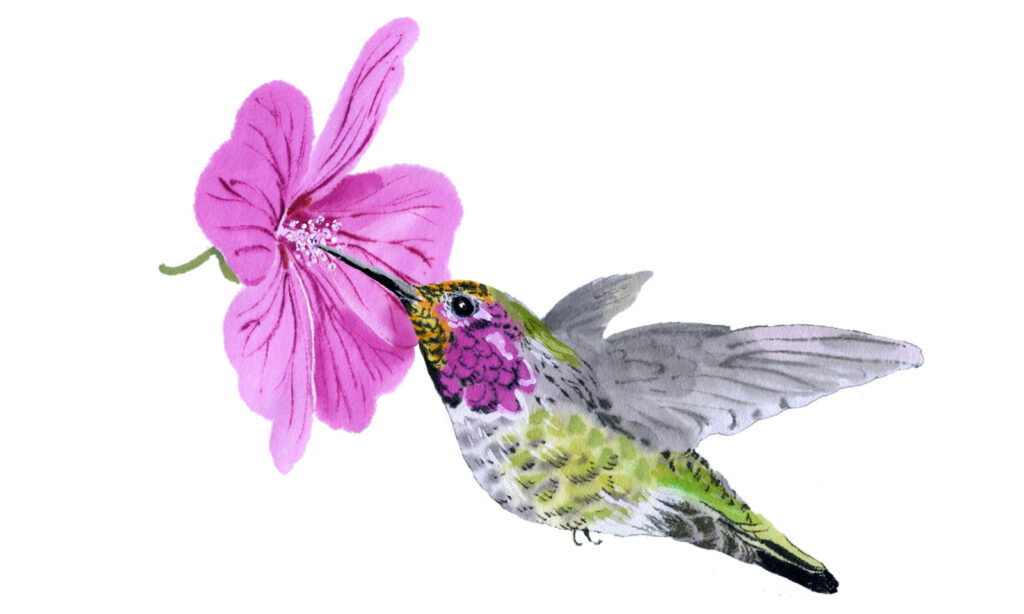
Anna’s hummingbirds flaunt their iridescent emerald feathers and rose-pink throats as they seek out nectar. Rather than a flock, a group of them is better described as a glittering, a shimmer or a hover of hummingbirds. The tiny birds weigh less than a nickel, and their hearts beat at up to 1,200 times a minute.